

Chicken stock is one of the foundational elements in cooking, offering a rich base for soups, sauces, stews, and countless recipes. Learning how to make chicken stock not only elevates your dishes but also allows you to control flavor, quality, and nutritional value. Unlike store-bought options, homemade chicken stock delivers a depth of taste that is impossible to replicate with commercial products. In this article, we’ll guide you through every step of the process, from selecting ingredients and simmering techniques to storage tips and variations for flavor enhancement.
What is Chicken Stock?
Chicken stock is a flavorful liquid made by simmering chicken bones, vegetables, herbs, and aromatics in water. Unlike chicken broth, which may use meat or a combination of meat and bones, stock primarily relies on bones to extract collagen and gelatin, giving it a thicker, more robust texture. This gelatin-rich liquid forms the backbone of countless culinary creations, enhancing both taste and mouthfeel. Understanding the difference between stock and broth is essential for cooks looking to maximize flavor and texture in their recipes. Stock is typically richer, more complex, and ideal for recipes that require a deep, savory foundation.
Why Homemade Chicken Stock is Better
Making chicken stock at home offers multiple advantages. First, it allows for complete control over ingredients, avoiding the excess sodium, preservatives, or flavor enhancers found in store-bought products. Second, homemade stock is more flavorful and aromatic because it simmers slowly, extracting maximum essence from the bones and aromatics. Third, it is highly nutritious; the collagen, minerals, and amino acids released from the bones contribute to joint health and overall wellness. Finally, homemade stock is versatile—you can adjust the recipe to suit your preferences, whether you want a light, delicate flavor or a deeply concentrated stock for hearty recipes.
Ingredients Needed for Chicken Stock
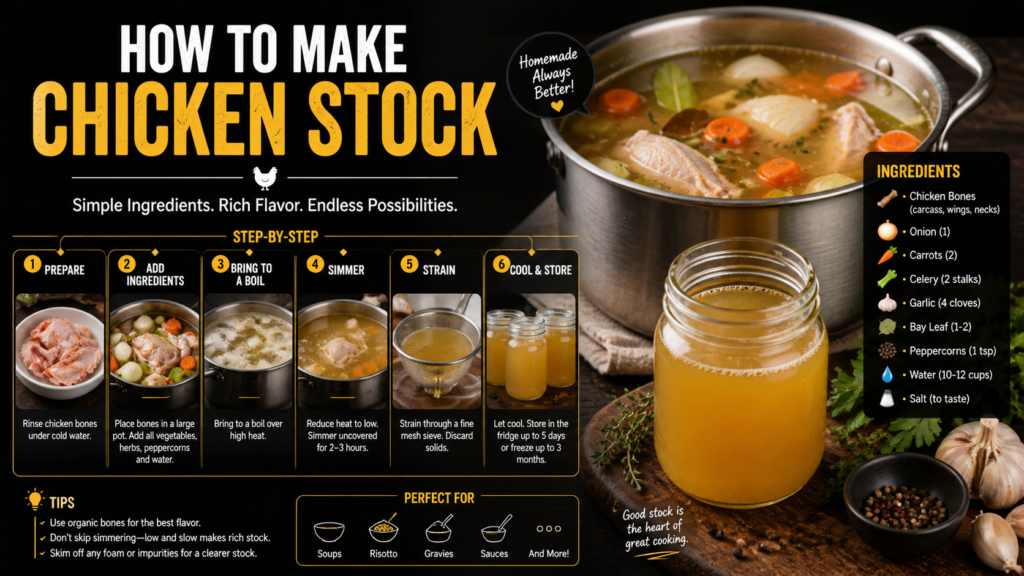
A quality chicken stock starts with the right ingredients. Core components include:
- Chicken Bones: Use raw, roasted, or leftover carcasses from roasted chicken.
- Vegetables: Common choices are onions, carrots, and celery (the classic mirepoix).
- Herbs & Aromatics: Bay leaves, thyme, parsley, garlic, and peppercorns enhance flavor.
- Water: Cold water is used to slowly extract flavor and gelatin from bones.
- Optional Additions: Mushrooms, leeks, or parsnips can add depth.
Selecting fresh, high-quality ingredients ensures a rich and clean-tasting stock. Roasting the bones beforehand intensifies flavor, while fresh vegetables provide natural sweetness and balance. Using organic or free-range chicken can further elevate both taste and nutritional content.
Tools and Equipment Required
While chicken stock is relatively simple to make, certain tools make the process easier and more effective:
- Large Stockpot: Essential for simmering bones and ingredients evenly.
- Fine-Mesh Strainer or Cheesecloth: To remove solids for a clear, smooth stock.
- Ladle: For skimming foam or fat during cooking.
- Cutting Board & Sharp Knife: For chopping vegetables.
- Storage Containers: For freezing or refrigerating finished stock.
Investing in the right tools ensures a cleaner, more consistent stock and makes the process more efficient. Using a heavy-bottomed stockpot helps distribute heat evenly, preventing scorching during long simmering periods.
Step-by-Step Guide to Making Chicken Stock
Here is a simple process to make flavorful chicken stock:
- Prepare the Bones: Rinse chicken bones and remove any excess fat. Optional: roast bones at 400°F for 20–30 minutes for a richer flavor.
- Prepare Vegetables: Chop onions, carrots, and celery into large chunks.
- Combine Ingredients: Place bones, vegetables, herbs, and aromatics in a stockpot. Cover with cold water, about 1–2 inches above ingredients.
- Simmer Slowly: Bring to a boil, then reduce to a gentle simmer. Avoid rapid boiling, which can cloud the stock.
- Skim Foam and Fat: Occasionally skim off any foam or impurities that rise to the top.
- Cook Long: Simmer for 4–6 hours, or longer for deeper flavor. Some chefs simmer up to 12 hours for concentrated stock.
- Strain the Stock: Use a fine-mesh strainer or cheesecloth to remove solids.
- Cool and Store: Allow to cool before refrigerating or freezing. Remove excess fat if desired.
This slow and careful process ensures maximum flavor extraction and a rich, gelatinous texture. Patience is key—the longer and gentler the simmer, the more robust the stock.
Tips for Enhancing Flavor
To create the best-tasting chicken stock:
- Roast Bones First: Roasting caramelizes the bones, adding depth and complexity.
- Use Cold Water: Start with cold water to extract collagen and gelatin efficiently.
- Add Aromatics Gradually: Herbs like thyme or parsley can be added later to avoid overcooking.
- Control Salt: Avoid salting early; it can concentrate too much during long simmering.
- Avoid Overcooking Vegetables: Remove vegetables halfway through to prevent bitterness.
These small techniques significantly improve the final flavor profile, resulting in a stock that is rich, balanced, and versatile for multiple recipes.
Common Mistakes to Avoid
Even experienced cooks can make errors that affect stock quality:
- Boiling Rapidly: High heat clouds the stock and creates a less clean flavor.
- Skipping Skimming: Foam or impurities left on top result in bitter or gritty stock.
- Overusing Salt: Excess salt limits versatility in other recipes.
- Using Only Meat: Bones are essential for gelatin; using only meat produces thinner broth.
- Not Cooking Long Enough: Short simmering fails to extract full flavor and nutrients.
Avoiding these pitfalls ensures a professional-quality chicken stock every time.
Storing and Using Chicken Stock
Proper storage maximizes the shelf life and usability of your stock:
- Refrigeration: Store in airtight containers for up to 5 days.
- Freezing: Freeze in portioned containers or ice cube trays for up to 6 months.
- Using in Recipes: Chicken stock can be a base for soups, stews, gravies, risottos, sauces, or braises.
Freezing in smaller portions is particularly convenient, allowing you to thaw only what you need without waste. Additionally, chilled stock will form a layer of gelatin or fat on top—this can be removed or stirred in depending on recipe needs.
Variations of Chicken Stock
Chicken stock can be customized based on your culinary goals:
- Herb-Infused Stock: Add rosemary, sage, or tarragon for aromatic flavors.
- Spicy Stock: Incorporate peppercorns, chili flakes, or ginger for heat.
- Roasted Chicken Stock: Roast bones and vegetables for a deeper, nutty flavor.
- Light Stock: Use fewer bones and longer simmering for a delicate base.
Experimenting with variations allows chefs to match stock flavors with specific recipes, from light soups to hearty gravies.
Health Benefits of Chicken Stock
Chicken stock is not just flavorful—it’s nutritious. Key benefits include:
- Collagen & Gelatin: Supports joint health and gut lining.
- Minerals: Provides calcium, magnesium, and phosphorus.
- Amino Acids: Contains glycine and proline, aiding digestion and skin health.
- Hydration & Electrolytes: Stock is hydrating and supports recovery, especially in soups.
Homemade stock ensures that these nutrients are preserved without additives or preservatives, making it both a culinary and healthful choice.
Conclusion
Learning how to make chicken stock opens up endless culinary possibilities. With simple ingredients—chicken bones, vegetables, and aromatics—you can create a rich, flavorful base that enhances soups, sauces, stews, and more. By following proper techniques, avoiding common mistakes, and experimenting with variations, you can achieve professional-quality stock every time. Whether you’re an aspiring chef, home cook, or culinary enthusiast, homemade chicken stock is a foundational skill that elevates every dish while providing nutritional benefits. Take the time to master this technique, and you’ll never underestimate the power of a well-made chicken stock again.