
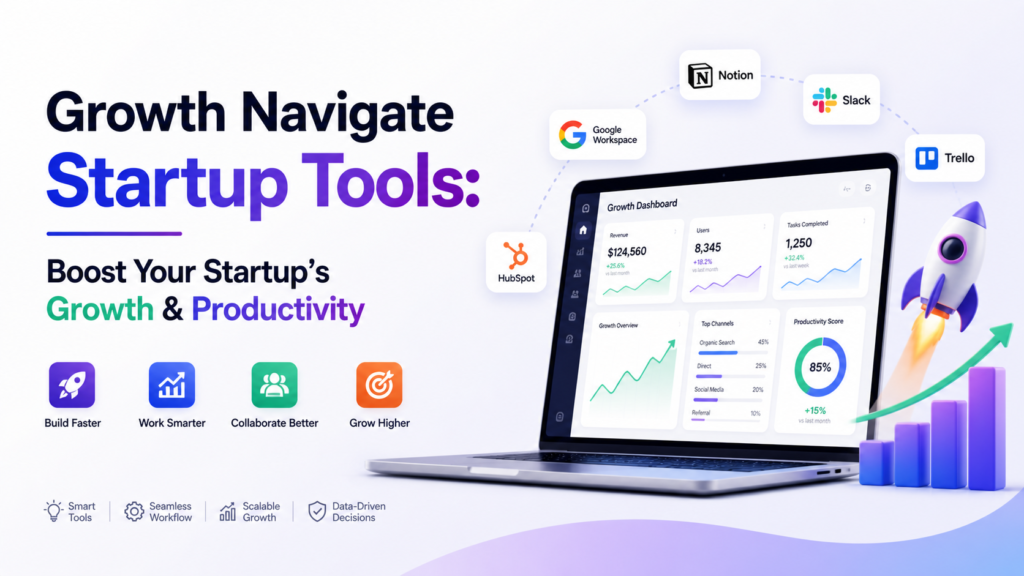

In today’s fast-paced business environment, startups face unique challenges. From limited resources to tight deadlines, founders often need the right tools to manage growth efficiently. Growth navigate startup tools have emerged as essential solutions for startups seeking to streamline operations, improve productivity, and scale effectively. These tools help startups make informed decisions, optimize workflows, and accelerate growth without wasting valuable time or resources. In this article, we’ll explore what growth navigate startup tools are, their benefits, popular options, and strategies to implement them successfully.
What Are Growth Navigate Startup Tools?
Growth navigate startup tools are specialized software and platforms designed to help startups manage, track, and optimize their growth journey. Unlike traditional business tools, these are focused on helping early-stage companies identify opportunities, allocate resources efficiently, and make data-driven decisions. From analytics dashboards and project management platforms to customer relationship management (CRM) systems, these tools allow startups to navigate growth challenges systematically. The core idea is to reduce operational friction, provide actionable insights, and help founders focus on scaling their business rather than getting lost in day-to-day tasks.
The Importance of Growth Tools for Startups
Startups operate in a high-risk, resource-constrained environment. Growth navigate startup tools become critical because they allow teams to prioritize tasks, automate repetitive processes, and monitor performance metrics in real-time. Without these tools, startups often waste time on manual processes, miss critical insights, and fail to respond quickly to market changes. By integrating growth-focused tools early on, startups can track user acquisition, engagement, and retention metrics, enabling data-driven decisions. Moreover, these tools support remote collaboration, improve team efficiency, and provide the flexibility needed to adapt to rapid changes in the market.
Key Features to Look for in Growth Navigate Startup Tools
Choosing the right tools is crucial for effective growth management. Some key features to look for include:
- Analytics and Reporting: Insightful dashboards that display KPIs and track progress.
- Automation Capabilities: Tools that reduce manual work through automated workflows.
- Collaboration and Communication: Platforms that allow teams to communicate efficiently.
- Scalability: Solutions that grow with your startup, accommodating increasing users and data.
- Integration: Ability to connect with other software such as CRM, marketing platforms, and accounting tools.
- User-Friendly Interface: Easy adoption is essential, especially for small teams with limited technical expertise.
Tools with these features help startups navigate growth more strategically, avoid operational bottlenecks, and focus on revenue-generating activities.
Categories of Growth Navigate Startup Tools
Growth navigate startup tools can be broadly divided into several categories:
- Project Management Tools: Platforms like Asana, Trello, or Monday.com help startups track tasks, deadlines, and responsibilities.
- Marketing Automation Tools: HubSpot, Mailchimp, or ActiveCampaign automate marketing campaigns and track engagement.
- Analytics and Data Tools: Google Analytics, Mixpanel, and Amplitude provide insights into user behavior and growth metrics.
- CRM Tools: Salesforce, Pipedrive, and Zoho CRM help manage customer relationships and sales pipelines.
- Financial and Accounting Tools: QuickBooks, Xero, and FreshBooks simplify invoicing, accounting, and budgeting.
- Collaboration Tools: Slack, Notion, and Microsoft Teams facilitate team communication and knowledge management.
By strategically selecting tools from each category, startups can cover the essential pillars of growth navigation, including marketing, sales, operations, and analytics.
Benefits of Using Growth Navigate Startup Tools
The benefits of implementing growth navigate startup tools are multi-fold:
- Increased Efficiency: Automation reduces time spent on repetitive tasks.
- Improved Decision-Making: Data-driven insights help prioritize high-impact actions.
- Enhanced Team Collaboration: Centralized platforms improve communication and task tracking.
- Scalability: Tools provide systems that grow with the business.
- Cost-Effectiveness: Avoids hiring extra staff by automating processes.
- Faster Growth: Focused strategy and actionable insights accelerate user acquisition, retention, and revenue.
In essence, these tools transform chaotic startup operations into structured growth processes, giving founders the clarity and control needed to scale efficiently.
Popular Growth Navigate Startup Tools for Startups
Several tools have gained popularity among startups for their versatility and growth-oriented features:
- HubSpot: Comprehensive CRM and marketing automation platform that tracks leads and customer interactions.
- Notion: An all-in-one workspace for notes, projects, and team collaboration.
- Trello: Visual project management tool using boards and cards for task tracking.
- Slack: Communication platform with channels, messaging, and integrations for seamless collaboration.
- Google Analytics & Mixpanel: Essential analytics tools for tracking user behavior, conversion, and engagement.
- Zapier: Automation tool that connects multiple apps to streamline workflows.
These tools are widely used because they combine flexibility, scalability, and simplicity, allowing startups to navigate growth challenges effectively.
How to Implement Growth Navigate Startup Tools Successfully
Simply having the tools is not enough—successful implementation is key. Startups should:
- Identify Business Needs: Understand which areas—marketing, sales, operations—need optimization.
- Choose Relevant Tools: Avoid overloading teams with too many platforms. Focus on tools that solve specific problems.
- Train Your Team: Proper onboarding ensures everyone uses the tools effectively.
- Integrate Systems: Ensure tools communicate with each other to avoid siloed data.
- Monitor and Adjust: Regularly review usage and performance metrics, optimizing workflows based on insights.
By following a structured implementation strategy, startups can maximize ROI from their growth navigate tools and avoid the common pitfalls of tool overload or poor adoption.
Common Challenges Startups Face With Growth Tools
While growth navigate startup tools offer many benefits, startups can encounter challenges:
- Overcomplication: Using too many tools can overwhelm small teams.
- Integration Issues: Some tools may not communicate effectively with existing software.
- Cost Concerns: Premium tools can be expensive for bootstrapped startups.
- Learning Curve: Teams may struggle to adopt new platforms quickly.
Addressing these challenges requires careful tool selection, prioritizing usability, cost-effectiveness, and integration capabilities, and training teams adequately.
Measuring the Impact of Growth Navigate Tools
To determine whether your startup tools are effective, track key performance indicators (KPIs) such as:
- User Acquisition & Retention Rates: Shows the effect on marketing and customer engagement.
- Revenue Growth: Measures impact on sales and profitability.
- Task Completion Efficiency: Evaluates operational improvement.
- Employee Productivity Metrics: Monitors time saved through automation.
Regularly reviewing these KPIs helps startups fine-tune their toolset and ensure the selected platforms are driving tangible growth.
Future Trends in Startup Growth Tools
The future of growth navigate startup tools is promising, with trends such as:
- AI-Powered Insights: Tools will use machine learning to provide predictive analytics.
- All-in-One Platforms: Startups will rely on fewer integrated solutions covering multiple functions.
- Enhanced Mobile Experience: Access to dashboards and analytics on mobile devices will improve flexibility.
- Personalized Automation: Tools will adapt workflows based on company-specific needs.
These trends suggest that startups adopting modern growth tools now will be better positioned to scale efficiently and outpace competitors.
Conclusion
Growth navigate startup tools are essential for modern startups aiming to streamline operations, boost productivity, and accelerate growth. By leveraging the right tools in project management, marketing, analytics, CRM, and collaboration, startups can make data-driven decisions, improve efficiency, and scale effectively. While challenges exist, careful selection, proper implementation, and consistent monitoring of KPIs ensure that these tools deliver maximum impact. In a competitive business landscape, using growth navigate startup tools is not just an advantage—it’s a necessity for any startup seeking sustainable success.