
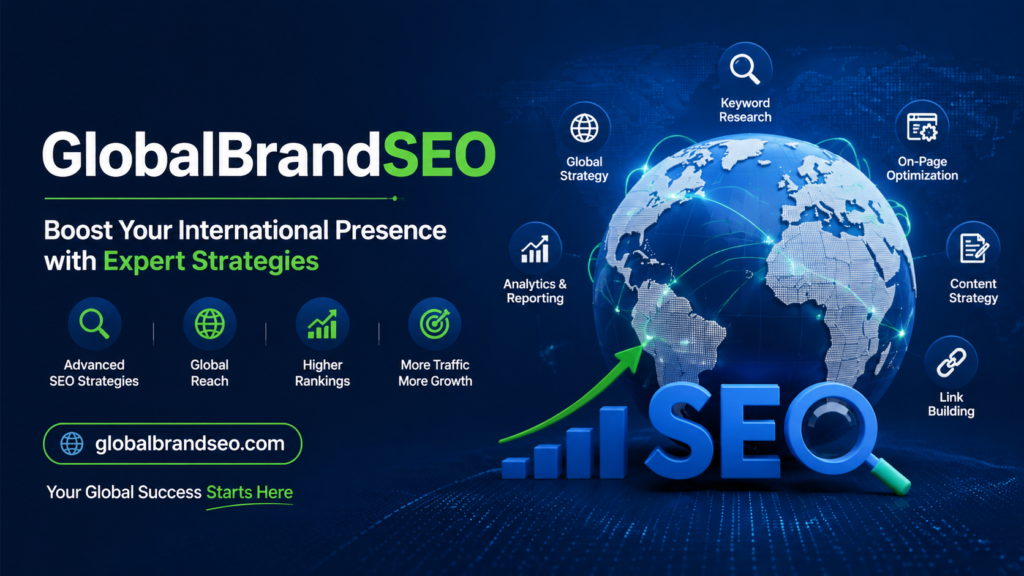

In today’s global marketplace, having a strong online presence is no longer optional—it is essential. Businesses are no longer competing only within their local regions; they are competing on a global scale. GlobalBrandSEO is the key to establishing and maintaining a strong international digital footprint, allowing brands to reach customers worldwide, improve visibility, and enhance credibility. Unlike traditional SEO, GlobalBrandSEO involves sophisticated strategies tailored for cross-border search engines, multilingual audiences, and diverse cultural markets.
Whether you are a multinational corporation or an emerging brand aiming to expand internationally, understanding and implementing GlobalBrandSEO strategies can make a significant difference in reaching global customers efficiently.
What Is GlobalBrandSEO and Why It Matters
GlobalBrandSEO refers to the specialized practice of optimizing a brand’s online presence for international search engines and audiences. While standard SEO focuses on improving local search rankings, GlobalBrandSEO addresses the challenges of targeting multiple countries, languages, and cultural contexts simultaneously.
It involves careful planning, including keyword research in different languages, local search engine behavior analysis, website localization, and content adaptation. By implementing GlobalBrandSEO, brands can increase visibility on search engines like Google, Bing, Baidu, and Yandex across multiple regions, driving more international traffic and potential conversions.
GlobalBrandSEO is essential for businesses looking to expand globally because it helps overcome language barriers, cultural nuances, and local search engine optimization differences. Without it, even the best products or services can remain invisible to international audiences.
The Key Benefits of GlobalBrandSEO
The benefits of GlobalBrandSEO go far beyond simply increasing website traffic. One of the most significant advantages is enhanced international visibility. Optimizing your brand for different countries allows search engines in those regions to understand your website’s relevance, increasing the likelihood of appearing in top search results.
Another critical benefit is brand credibility. A strong international SEO presence signals professionalism and reliability, building trust among customers worldwide. When users consistently find your brand at the top of search results across multiple regions, they are more likely to view your brand as an industry leader.
GlobalBrandSEO also enables targeted audience engagement. By adapting content and keywords to local markets, brands can create highly relevant messaging that resonates with diverse audiences. This increases user engagement, lowers bounce rates, and drives higher conversions compared to generic, non-localized content.
How Keyword Research Differs in GlobalBrandSEO
Keyword research is the foundation of any SEO strategy, but GlobalBrandSEO requires a more sophisticated approach. Instead of focusing solely on English keywords, brands must identify high-value search terms in the local languages of their target markets.
Tools like Google Keyword Planner, Ahrefs, and SEMrush can provide data on international search volumes and keyword difficulty, but local nuances often require additional research. For example, a term that performs well in the US might have little relevance or a different meaning in Germany, Brazil, or Japan.
Understanding search intent in each region is also crucial. Users in different countries may search for the same product differently, and GlobalBrandSEO strategies must account for these variations. Incorporating region-specific keywords, long-tail phrases, and even local slang ensures your content reaches the right audience effectively.
Website Localization for GlobalBrandSEO
One of the core pillars of GlobalBrandSEO is website localization. Localization goes beyond simple translation; it involves adapting your website’s content, design, and functionality to resonate with local audiences.
Localized websites should reflect cultural preferences, date formats, currencies, measurements, and even images relevant to the region. For instance, color schemes, layout, and user interface elements that work in one country may not appeal to users in another.
Additionally, proper use of hreflang tags is critical for GlobalBrandSEO. These tags signal to search engines which version of your page is intended for which language and region, helping prevent duplicate content issues and ensuring users land on the most relevant version of your website.
Content Strategy for International SEO
Content is at the heart of GlobalBrandSEO. To succeed internationally, brands must develop a multilingual content strategy that addresses the needs and preferences of different audiences.
This includes creating unique, high-quality content in multiple languages, optimizing meta titles and descriptions for local search engines, and ensuring that all content adheres to regional SEO best practices. Blogs, landing pages, product descriptions, and multimedia content should all be adapted to the cultural context.
Furthermore, content should reflect local trends, news, and seasonal events to improve relevance and engagement. For example, marketing campaigns around holidays like Diwali in India or Golden Week in Japan will resonate far better if localized effectively.
Technical SEO Considerations for GlobalBrandSEO
GlobalBrandSEO is not just about content; it also requires robust technical SEO implementation. This includes proper URL structures, mobile optimization, fast loading speeds, and secure HTTPS protocols, all tailored for international accessibility.
Separate subdirectories or subdomains for each target region are common in GlobalBrandSEO strategies. For example:
example.com/us/for the United Statesexample.com/de/for Germany
Choosing the right structure affects crawlability, indexation, and overall search engine ranking. International websites should also include sitemap optimization for each language version and ensure server locations do not negatively affect page speed in target countries.
Link Building and Authority in GlobalBrandSEO
Backlinks play a pivotal role in GlobalBrandSEO. However, international link building requires focusing on relevant local websites to build authority within each market. High-quality backlinks from respected local domains can significantly improve search engine rankings in specific regions.
Partnerships with local influencers, guest blogging, and engaging in regional online communities can enhance link profiles. Additionally, brand citations in local business directories and industry-specific websites contribute to establishing credibility and trustworthiness in foreign markets.
Tracking and Analytics for Global SEO Performance
Monitoring the effectiveness of your GlobalBrandSEO strategy is critical. Tools like Google Analytics, Google Search Console, Ahrefs, and SEMrush provide valuable insights into international traffic, keyword rankings, user behavior, and conversion metrics.
For global campaigns, tracking should include:
- Traffic by country and language
- Keyword rankings in local search engines
- Engagement metrics, including bounce rates and session duration
- Conversion rates by region
Data-driven decisions allow businesses to refine GlobalBrandSEO strategies continuously, addressing underperforming regions and optimizing content for maximum impact.
Common Challenges in GlobalBrandSEO and How to Overcome Them
Implementing GlobalBrandSEO comes with challenges. Language barriers and inaccurate translations can hinder user experience, while cultural misalignment may reduce engagement. To overcome this, brands should invest in professional localization services and involve native speakers in content creation.
Another challenge is managing multiple domains and subdirectories across regions. Businesses must maintain consistent brand identity while tailoring content and functionality for each market. Using a centralized content management system (CMS) can streamline this process.
Finally, staying compliant with international regulations such as GDPR or CCPA is crucial to avoid penalties and maintain user trust. Proper data handling, privacy policies, and consent management are essential components of any GlobalBrandSEO strategy.
Future Trends in GlobalBrandSEO
GlobalBrandSEO continues to evolve as technology and search engine algorithms advance. Key trends include the rise of AI-powered international SEO tools, voice search optimization, and localized video content.
Generative AI can assist in creating high-quality multilingual content, while predictive analytics helps identify emerging market opportunities. Additionally, optimizing for voice search in local languages and dialects will become increasingly important as mobile and smart speaker usage grows worldwide.
Brands that stay ahead of these trends and continuously refine their GlobalBrandSEO strategies will achieve greater international visibility, stronger engagement, and higher conversion rates in the years to come.
Conclusion: Embrace GlobalBrandSEO to Expand Your Reach
In an increasingly connected world, GlobalBrandSEO is no longer a luxury; it is a necessity. By implementing strategic international SEO practices, businesses can increase visibility, engage diverse audiences, and establish credibility in multiple markets.
A comprehensive approach includes keyword research across languages, website localization, content adaptation, technical optimization, and international link building. While challenges exist, the rewards of reaching a global audience, building brand authority, and driving international growth far outweigh the obstacles.
Companies that embrace GlobalBrandSEO today will position themselves as leaders in tomorrow’s global marketplace, achieving sustainable growth, wider reach, and long-term success.



I’ve always focused on local SEO, but this post really highlights the importance of thinking globally. Tailoring content for different cultural contexts seems like a game-changer for expanding international reach.
Thank you dear.
This post really highlights how essential localization is when moving beyond just standard keyword optimization for a global audience. I particularly agreed with the point about adapting to different search engines like Baidu, since many brands overlook region-specific platforms entirely. Thanks for breaking down the strategic differences between local and international SEO so clearly.