
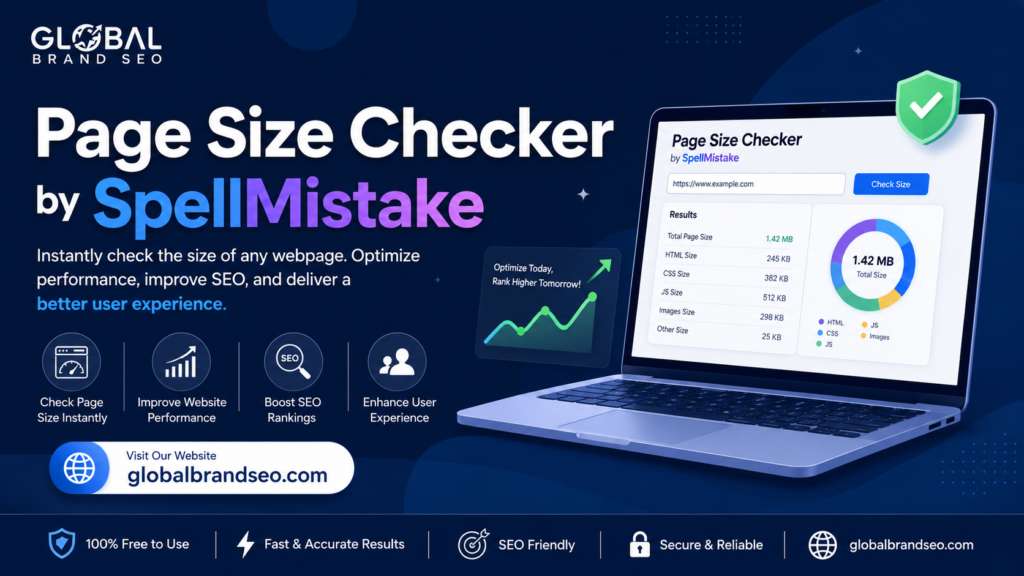

In today’s fast-paced digital world, website performance is crucial for user experience, SEO, and overall business success. One of the key aspects affecting website speed and performance is page size. Larger web pages can result in slower loading times, higher bounce rates, and lower search engine rankings. To address this, the page size checker by SpellMistake offers a powerful, user-friendly tool to measure, analyze, and optimize your website pages for peak performance.
This article explores the benefits, features, and strategies for using page size checker by SpellMistake to ensure your web pages are fast, lightweight, and optimized for both users and search engines.
Understanding Page Size and Its Importance
Page size refers to the total amount of data that needs to be downloaded by a user’s browser to fully display a webpage. This includes images, scripts, CSS files, videos, fonts, and other assets. The larger the page size, the longer it takes to load, which can negatively impact user experience. According to recent studies, even a one-second delay in page load can reduce conversions by up to 7%.
The page size checker by SpellMistake allows website owners and developers to precisely measure page size, providing detailed insights into which elements contribute the most to the load. By understanding and controlling page size, businesses can improve site speed, enhance SEO, and retain more visitors.
How Page Size Impacts SEO and Rankings
Search engines prioritize websites that provide fast and smooth user experiences. Google, for instance, has officially confirmed that page speed is a ranking factor. A larger page size can lead to slower loading times, resulting in lower search engine rankings. This makes tools like the page size checker by SpellMistake essential for any website owner who wants to maintain a competitive edge in organic search results.
By using the tool, you can identify bloated elements, reduce unnecessary scripts, and optimize media files, ensuring your website meets search engine expectations. Optimized page sizes not only improve rankings but also enhance visibility, increase click-through rates, and reduce bounce rates.
Key Features of Page Size Checker by SpellMistake
The page size checker by SpellMistake is more than just a measurement tool. Its key features include:
- Detailed Analysis: Breaks down the page into images, scripts, stylesheets, fonts, and other elements.
- Performance Metrics: Shows the load time, number of requests, and total size.
- Optimization Recommendations: Provides actionable tips to reduce page size and improve speed.
- User-Friendly Interface: Easy to use, even for beginners, with visual charts and reports.
- Compatibility Checks: Ensures pages are optimized for both desktop and mobile devices.
These features make it a comprehensive solution for webmasters looking to enhance their website performance quickly and efficiently.
Step-by-Step Guide to Using Page Size Checker by SpellMistake
Using the page size checker by SpellMistake is straightforward, yet it can yield powerful insights. Here’s a step-by-step guide:
- Enter Your URL: Input the webpage you want to analyze.
- Run the Analysis: The tool scans all elements, calculating total page size and load times.
- Review the Breakdown: Examine which assets contribute the most to page size.
- Check Optimization Suggestions: Identify scripts, images, or plugins that can be optimized.
- Implement Changes: Compress images, minify CSS/JS, and remove unnecessary assets.
- Recheck Your Page: Ensure changes reduce page size without compromising quality.
By following these steps, webmasters can systematically improve page performance while maintaining a seamless user experience.
Common Factors That Increase Page Size
Several factors can contribute to a larger page size:
- High-Resolution Images: Large images are often the biggest contributors to page size.
- Excessive Scripts and Plugins: Too many JavaScript or third-party plugins can slow down pages.
- Unoptimized CSS: Bloated stylesheets add unnecessary weight.
- Embedded Media: Videos, audio, and large fonts increase load times.
- Heavy Analytics Tools: Multiple tracking scripts can add significant size.
The page size checker by SpellMistake identifies these elements, helping developers prioritize optimization efforts for maximum impact.
Optimizing Images for Smaller Page Size
Images are often the heaviest elements on a webpage. To optimize images and reduce page size, consider the following:
- Compression: Use tools to compress images without losing quality.
- Modern Formats: Use formats like WebP or AVIF for smaller file sizes.
- Lazy Loading: Load images only when they appear in the viewport.
- Responsive Images: Serve different image sizes based on the user’s device.
By combining these strategies with insights from the page size checker by SpellMistake, websites can achieve significant reductions in page size, leading to faster load times and improved user experience.
Optimizing Scripts and CSS
JavaScript and CSS files can also inflate page size and slow loading. Best practices for optimization include:
- Minification: Remove unnecessary whitespace and comments.
- Bundling: Combine multiple files to reduce HTTP requests.
- Asynchronous Loading: Load scripts asynchronously to prevent render-blocking.
- Removing Unused Code: Eliminate CSS or JS that is not actively used on the page.
The page size checker by SpellMistake highlights which scripts and stylesheets are the heaviest, allowing developers to focus on files that matter most.
Monitoring Page Size for Ongoing Optimization
Website performance is not a one-time task. Pages often grow over time due to new content, updates, or additional plugins. Regular monitoring with the page size checker by SpellMistake ensures your website remains optimized. Scheduled checks allow developers to detect increases in page size early, preventing performance degradation and maintaining a consistently fast experience for users.
Proactive monitoring also helps in A/B testing, where the impact of different design choices or content additions on page size can be measured before deployment.
Benefits of Using Page Size Checker by SpellMistake
Using the page size checker by SpellMistake brings multiple advantages:
- Faster Loading Times: Reduced page size leads to quicker loading.
- Improved SEO: Search engines favor fast-loading websites.
- Enhanced User Experience: Users spend more time on pages that load quickly.
- Cost Savings: Smaller pages reduce bandwidth usage and hosting costs.
- Data-Driven Decisions: Understand exactly which elements impact page performance.
These benefits combine to make websites more competitive, efficient, and user-friendly.
Conclusion: Make Page Optimization a Priority
The digital landscape is competitive, and users expect fast, responsive websites. By leveraging the page size checker by SpellMistake, webmasters, developers, and business owners can measure, analyze, and optimize their pages effectively. Reducing page size not only improves speed but also boosts SEO, engagement, and conversion rates.
Website optimization is a continuous process, and tools like page size checker by SpellMistake make it easier to maintain high standards without guesswork. From analyzing images and scripts to implementing best practices, this tool is an essential part of any website performance strategy. If you want your website to deliver exceptional user experiences, stay ahead in search rankings, and minimize load times, integrating page size checker by SpellMistake into your workflow is a smart and necessary step.