
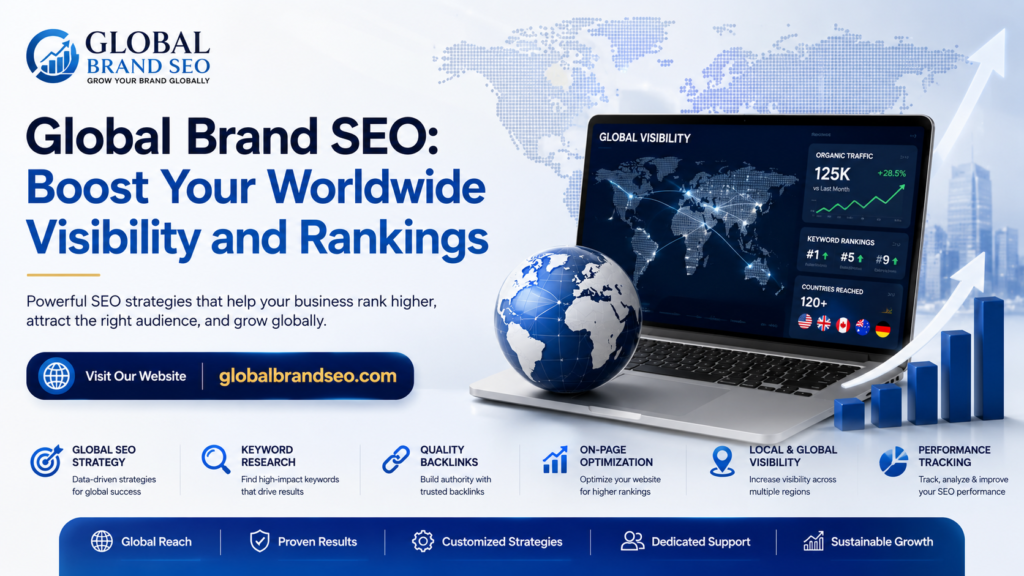

Expanding your brand globally is an ambitious and exciting goal, but in today’s digital-first marketplace, achieving international visibility requires a strategic approach. Global Brand SEO is not merely a translation of local SEO efforts; it is a comprehensive strategy to optimize your website, content, and online presence across multiple countries, languages, and search engines. Companies that successfully implement Global Brand SEO can achieve higher rankings, build trust with international audiences, and drive conversions at a global scale.
Understanding Global Brand SEO
Global Brand SEO is the practice of enhancing your brand’s online visibility on a worldwide scale. Unlike local SEO, which focuses on a specific geographic region, Global Brand SEO considers international search intent, multilingual content, country-specific search engines, and regional consumer behavior. It’s an intricate blend of technical SEO, content strategy, and localization, all designed to make your brand discoverable across borders. For a brand to be truly global, its SEO strategy must address these challenges strategically and consistently.
The Importance of a Global SEO Strategy
A well-executed Global Brand SEO strategy ensures that your content reaches the right audience regardless of geographic location. As businesses expand, potential customers in different countries might speak different languages, have varying search behaviors, or use alternative search engines. Google dominates in many markets, but engines like Baidu in China, Yandex in Russia, or Naver in South Korea hold significant market share. Ignoring these nuances could limit your brand’s reach. Additionally, cultural differences, regional regulations, and local user expectations must be considered to build trust and engagement.
Keyword Research for International Markets
One of the most critical aspects of Global Brand SEO is international keyword research. It is insufficient to translate keywords from your primary language; search intent varies across regions. For instance, a keyword with high search volume in English may not have the same relevance or search volume in Spanish or Mandarin. Tools such as Google Keyword Planner, SEMrush, Ahrefs, and local search engine keyword tools are invaluable. Marketers must focus on discovering both primary and long-tail keywords specific to each target region to ensure content resonates with local audiences.
Multilingual and Multiregional Website Optimization
Global Brand SEO requires websites to cater to multiple languages and regions without creating duplicate content or technical issues. Implementing the correct hreflang tags allows search engines to understand which language or regional version of a page to show to users, avoiding SEO penalties for duplicate content. Additionally, URL structures should reflect geographic targeting, such as country-code top-level domains (ccTLDs) like .fr for France or subdirectories like example.com/fr/. Proper technical setup ensures that search engines index the correct regional pages and users have a seamless browsing experience.
Localized Content Marketing
While translation is the first step, localization is the next and far more powerful step. Localized content goes beyond literal translations to adapt to cultural norms, idioms, and regional preferences. For example, images, examples, and testimonials should resonate with the local audience. Moreover, content strategies should address local trends, industry challenges, and regional search behavior. Producing high-quality, culturally relevant content not only improves SEO rankings but also fosters brand credibility, trust, and engagement internationally.
Technical SEO for Global Reach
Technical SEO forms the backbone of Global Brand SEO. A fast, secure, and crawlable website ensures that search engines can index your pages efficiently, regardless of location. International websites must optimize site speed for different regions, implement server locations strategically, and utilize Content Delivery Networks (CDNs) to reduce latency. Structured data, canonical tags, and XML sitemaps also help search engines understand the site hierarchy. By addressing technical SEO challenges, brands can avoid penalties and maximize the chances of ranking well in multiple countries.
Link Building Across Borders
Backlinks remain a significant factor in SEO success. For Global Brand SEO, link-building efforts must focus on acquiring high-quality, region-specific backlinks. Links from authoritative local websites demonstrate credibility and relevance to regional search engines. Participating in local industry forums, contributing guest posts to reputable regional blogs, and forming partnerships with local influencers can enhance backlink diversity. A robust international link-building strategy amplifies domain authority and supports higher search rankings in each target market.
Mobile Optimization and User Experience
Global audiences increasingly access websites via mobile devices. Mobile optimization is no longer optional; it is critical for Global Brand SEO success. Mobile-friendly websites improve user experience, reduce bounce rates, and enhance engagement. Google’s mobile-first indexing further emphasizes the need for responsive design, fast-loading pages, and intuitive navigation. Additionally, understanding local mobile behaviors, such as preferred payment methods or mobile search patterns, can improve conversion rates and increase the global impact of your brand.
Tracking, Analytics, and Continuous Improvement
A successful Global Brand SEO strategy relies on data-driven decision-making. Using tools like Google Analytics, Google Search Console, and regional analytics platforms, marketers can track keyword performance, user behavior, and conversions across different regions. Regular audits and continuous optimization are essential to identify new opportunities, correct errors, and adapt strategies based on emerging trends. SEO is not a one-time effort; it is a continuous cycle of analysis, testing, and improvement to maintain global visibility.
Challenges and Opportunities in Global SEO
Global Brand SEO comes with unique challenges, including managing multilingual content, navigating local regulations like GDPR, and staying up-to-date with search engine algorithm updates in different countries. However, the opportunities far outweigh the challenges. Companies that invest in global SEO can achieve sustainable growth, reach untapped markets, and establish brand authority worldwide. By combining technical expertise, cultural insight, and strategic planning, businesses can turn Global Brand SEO into a competitive advantage.
Conclusion: The Future of Global Brand SEO
Global Brand SEO is essential for companies aiming to establish an international presence and dominate search rankings worldwide. By focusing on international keyword research, multilingual optimization, technical SEO, localized content, and continuous improvement, brands can connect with audiences across borders and cultures. As the digital landscape continues to evolve, businesses that invest in a robust Global Brand SEO strategy will enjoy increased visibility, credibility, and global market share.