

Introduction: Understanding Cat Pregnancy
Pregnancy in cats, also known as “queening,” is an exciting yet often mysterious process for many pet owners. Whether you’re a first-time cat parent or experienced in feline care, understanding how long cats are pregnant and what to expect during this time is crucial to ensuring the health and well-being of both the mother and her kittens. This guide will walk you through everything you need to know about cat pregnancy, including the duration, signs of pregnancy, and how to provide proper care throughout the gestation period.
How Long Are Cats Pregnant? The Duration of Cat Pregnancy
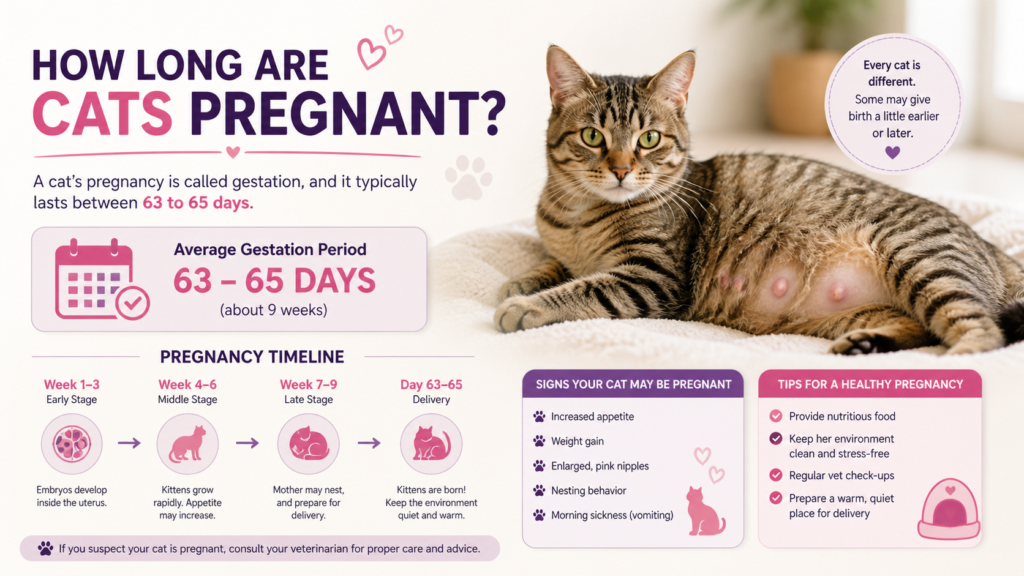
A common question many cat owners have is, “How long are cats pregnant?” On average, cats are pregnant for about 63 to 65 days, or roughly 9 weeks. However, the exact duration can vary depending on factors like the cat’s breed, age, health, and the size of the litter. Some cats may give birth as early as 58 days, while others may carry the kittens for up to 70 days. This section will explore the typical duration of a cat’s pregnancy and factors that can influence the length of the gestation period.
Signs of Pregnancy in Cats: How to Tell if Your Cat is Expecting
Detecting pregnancy in a cat can be tricky, especially in the early stages. Unlike humans, cats don’t have visible bumps or obvious signs of pregnancy for the first few weeks. However, as the pregnancy progresses, you may notice several physical and behavioral changes. Some of the most common signs of pregnancy in cats include:
- Increased Appetite: Pregnant cats often eat more due to the nutritional needs of the growing kittens.
- Behavioral Changes: You may notice your cat becoming more affectionate or, alternatively, more withdrawn.
- Enlarged Nipples: The cat’s nipples will become larger and may darken in color.
- Weight Gain: Over time, the cat will gradually gain weight as the kittens develop. This section will dive deeper into each of these signs, explaining when they typically appear and how to monitor your cat’s progress throughout pregnancy.
The Stages of Cat Pregnancy: What Happens Week by Week?
Cat pregnancy can be broken down into three distinct stages, each of which is important for the development of the kittens and the health of the mother. Understanding what happens during each stage can help you anticipate changes in your cat’s behavior and physical condition.
- Weeks 1-3: Early pregnancy – The fertilized eggs implant, and your cat may show subtle signs like increased appetite or lethargy.
- Weeks 4-6: Mid-pregnancy – The kittens start to grow, and the cat’s belly will become noticeable. Behavioral changes like nesting may occur.
- Weeks 7-9: Late pregnancy – The kittens are almost fully developed, and the cat may begin to prepare for labor. This section will give a detailed week-by-week breakdown of what to expect during each stage of pregnancy.
How to Care for a Pregnant Cat: Essential Tips for Expecting Cat Parents
Proper care is crucial to ensure the health and well-being of both the mother cat and her kittens. During pregnancy, your cat will have increased nutritional needs and may require more attention than usual. Some essential care tips include:
- Proper Nutrition: Feeding your cat a high-quality, well-balanced diet specifically designed for pregnant cats or kittens.
- Hydration: Ensuring your cat has access to fresh water at all times.
- Comfortable Environment: Providing a quiet, comfortable space for your cat to rest and relax as her pregnancy progresses.
- Regular Vet Checkups: Taking your cat to the vet for regular checkups to monitor the health of both the mother and the developing kittens. This section will provide a comprehensive guide on how to care for a pregnant cat, with tips on feeding, grooming, and creating a stress-free environment for her.
How to Prepare for the Birth: Creating a Safe and Comfortable Environment
As your cat’s pregnancy progresses, it’s important to prepare for the birth of her kittens. Creating a safe, quiet, and comfortable birthing space will help ensure that your cat has a positive and stress-free experience. Some things to consider include:
- Choosing a Birthing Area: A quiet, private place away from the household’s usual activity is ideal for your cat to give birth.
- Preparing a Nesting Box: Provide a nesting box or clean, soft bedding where your cat can give birth and care for her kittens.
- Monitor for Signs of Labor: Learn to recognize the signs that your cat is going into labor, such as nesting behaviors, restlessness, and pacing. This section will walk you through the process of setting up the perfect birthing environment for your cat.
Labor and Delivery: What to Expect During the Birthing Process
Labor in cats is a relatively short process, but it can vary from cat to cat. The entire birthing process typically lasts between 4 to 24 hours. During this time, your cat will give birth to her kittens in a series of stages. Some key points to watch for during labor include:
- Signs of Labor: Your cat may become more restless, vocalize, or display nesting behavior as labor approaches.
- Delivery of Kittens: The birth of each kitten usually happens within 15-30 minutes of the first stage of labor. The mother will often lick the kittens clean and bite through the umbilical cord.
- Post-Birth Care: After delivery, ensure that all kittens are nursing and that the mother is clean and comfortable. This section will provide step-by-step guidance on what to expect during the labor and delivery process and how to assist your cat if needed.
Complications During Pregnancy and Birth: When to Seek Veterinary Help
While most cat pregnancies progress without issue, complications can arise. Some common pregnancy complications include:
- False Pregnancy: Some cats may show signs of pregnancy but are not actually carrying kittens.
- Dystocia (Difficult Birth): If your cat is having trouble delivering a kitten, this could be a sign of a complication.
- Retained Placenta: If the placenta is not delivered after each kitten, this can lead to infection. If you notice anything unusual, such as prolonged labor, severe distress, or lack of progress during birth, it’s important to contact a veterinarian immediately. This section will address common pregnancy and birth complications and how to handle them.
Caring for Newborn Kittens: Post-Birth Care for Mother and Kittens
Once the kittens are born, it’s important to monitor both the mother and the kittens closely. Ensure that each kitten is nursing properly, as this is essential for their survival and growth. Other things to consider include:
- Checking for Dehydration or Illness: Make sure the kittens are nursing and gaining weight.
- Maintaining Hygiene: Keep the nesting area clean to prevent infection.
- Socialization: Once the kittens are a few weeks old, gentle handling can help them become accustomed to human interaction. This section will explain how to care for both the mother and the newborn kittens, including when to seek veterinary care.
When to Spay Your Cat After Pregnancy: The Benefits of Preventing Future Litters
After your cat has given birth and weaned her kittens, it may be a good time to consider spaying her to prevent future pregnancies. Spaying offers numerous health benefits for female cats, including a reduced risk of certain cancers and uterine infections. This section will discuss the benefits of spaying and when the best time to schedule the procedure is.
Conclusion: Enjoying the Journey of Cat Pregnancy and Parenthood
Cat pregnancy is a beautiful and natural process, but it also requires responsibility and care. By understanding how long cats are pregnant and what to expect during the pregnancy and birth process, you can ensure that both the mother and her kittens remain healthy and happy. With proper care and attention, you can help your cat navigate her pregnancy and enjoy the joy of welcoming a new litter of kittens into your home.