
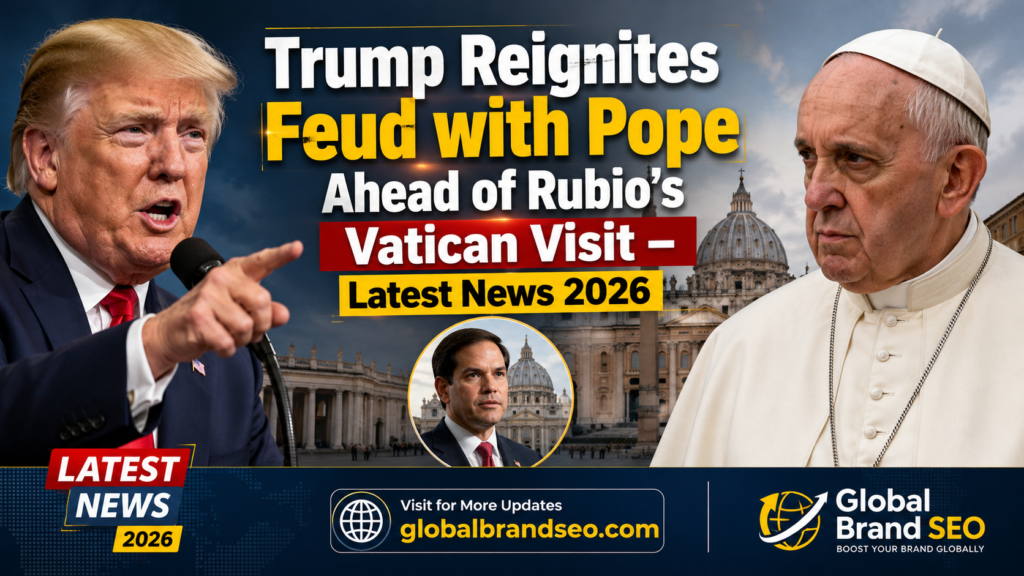

In a dramatic turn of events, Trump reignites feud with Pope Leo XIV just days before Marco Rubio’s Vatican visit, drawing international attention and sparking debates about US Vatican relations news and diplomatic tensions. The clash centers on differing views over Iran, nuclear weapons, and global peace, while Rubio is tasked with smoothing over relations between Washington and the Holy See. This article explores the feud, diplomatic fallout, reactions from global leaders, and what it means for Trump Pope conflict 2026.
Origins of the Trump-Pope Dispute
The Trump Pope conflict 2026 stems from disagreements over the U.S. approach to global crises, particularly the ongoing Iran nuclear situation. Trump has publicly criticized the Pope, accusing him of failing to address threats posed by Iran and misrepresenting U.S. interests. In contrast, Pope Leo XIV maintains a moral stance rooted in ethical diplomacy, urging peaceful negotiations rather than military action.
This ideological clash has escalated into one of the most public disputes between a sitting U.S. president and the Vatican in modern history. While Trump portrays the Pope’s approach as weak on security, the Vatican emphasizes that its positions are consistent with Catholic teachings on global peace and humanitarian responsibility.
Trump’s Latest Criticism of Pope Leo XIV
Recently, Trump’s comments have accused Pope Leo XIV of endangering global security through leniency on Iran’s nuclear ambitions. His remarks, amplified on social media, have sparked controversy, drawing criticism both in the United States and internationally. Some argue Trump’s rhetoric is intended to defend U.S. interests, while others warn it risks undermining diplomatic norms and the traditional authority of the Holy See.
The statements also included controversial visual comparisons and political messaging that many considered disrespectful, heightening the tension just before Marco Rubio Vatican visit.
Vatican’s Response and Defense
The Vatican has responded calmly, highlighting that Pope Leo XIV’s stance reflects long-standing ethical principles rather than political alignment. Officials stressed that the Church opposes nuclear weapons and advocates diplomacy and peace, refuting claims made by Trump. Senior cardinals have called Trump’s public attacks “strange” and emphasized that the Vatican seeks dialogue and understanding rather than confrontation.
This measured response underscores the ongoing importance of US Vatican relations news, particularly as the world monitors the unfolding interactions between Trump, the Pope, and Rubio.
Rubio’s Role in the Vatican Diplomacy
Marco Rubio’s Vatican visit takes on critical importance amid these tensions. As a prominent figure in the Trump administration and a practicing Catholic, Rubio is tasked with preserving diplomatic channels while addressing the concerns raised by Trump’s criticisms. The visit is intended to reaffirm cooperation on issues such as religious freedom, humanitarian aid, and international security.
Rubio’s ability to mediate between the U.S. administration and the Vatican will influence not only immediate diplomatic outcomes but also broader perceptions of U.S. commitment to international stability and ethical diplomacy.
Key Issues: Iran and Nuclear Policy
The primary source of the Trump Pope conflict 2026 revolves around Iran’s nuclear program. Trump advocates a hardline policy, including sanctions and military deterrence, whereas Pope Leo XIV calls for peaceful negotiations and multilateral diplomacy.
The Pope’s moral leadership emphasizes global stability, humanitarian responsibility, and ethical governance. This contrast in approach has led to heightened scrutiny of U.S. diplomacy, the Vatican’s influence in world affairs, and the political implications of Trump’s public criticisms.
Global Reactions to the Feud
Internationally, the feud has drawn reactions from Italy, European allies, and religious institutions. Italian leaders, including Prime Minister Giorgia Meloni, publicly supported the Pope and criticized Trump’s rhetoric. This has implications for US diplomacy Vatican Italy and reflects the complexity of balancing national security interests with religious and ethical considerations.
The broader global response also touches on alliances, NATO relations, and perceptions of U.S. leadership in mediating conflicts, emphasizing how a domestic dispute can ripple into international affairs.
Domestic Political Repercussions
Within the United States, the feud has created a polarized environment. Polls indicate that many Americans hold a positive view of Pope Leo XIV and a negative response to Trump’s criticisms. Religious communities and political commentators have weighed in, demonstrating that the dispute impacts both political and moral discourse.
Republican leaders express concerns about potential alienation of key voter blocs, while supporters argue that Trump’s hardline approach is necessary to protect national security. The situation illustrates how Trump criticism of Pope Leo intersects with domestic politics and public opinion.
Anticipated Outcomes of Rubio’s Visit
Marco Rubio Vatican visit is critical for defusing tensions. Potential outcomes include:
- Reaffirmed collaboration between the U.S. and Vatican.
- Clarification of U.S. and Vatican positions on Iran and global security.
- Mitigation of the public feud to restore trust and diplomatic decorum.
How Rubio navigates this visit could set the tone for future US politics and Vatican diplomacy and influence the trajectory of Trump Pope conflict 2026.
Broader Implications for US-Vatican Relations
This feud highlights the intricate balance of politics, religion, and international diplomacy. While disagreements on policy are normal, public confrontations between a U.S. president and the Pope are rare and unprecedented. Maintaining respectful dialogue with the Vatican is crucial for preserving ethical leadership, global stability, and cooperative alliances.
Long-term, the feud may influence U.S. foreign policy, shape public perception of American leadership, and impact global discussions on peace, nuclear weapons, and moral authority.
Conclusion
The public feud between Trump and Pope Leo XIV, combined with Marco Rubio Vatican visit, represents a significant moment in international diplomacy. With issues ranging from Iran’s nuclear program to ethical leadership, this conflict extends beyond personalities, reflecting the complex interplay between politics, religion, and global security.
How Rubio handles the Vatican visit will be crucial in mitigating tensions, maintaining US Vatican relations news, and reinforcing cooperation on critical global issues. As the world watches, this episode serves as a reminder of the challenges faced when national interests, moral authority, and diplomatic channels intersect.