
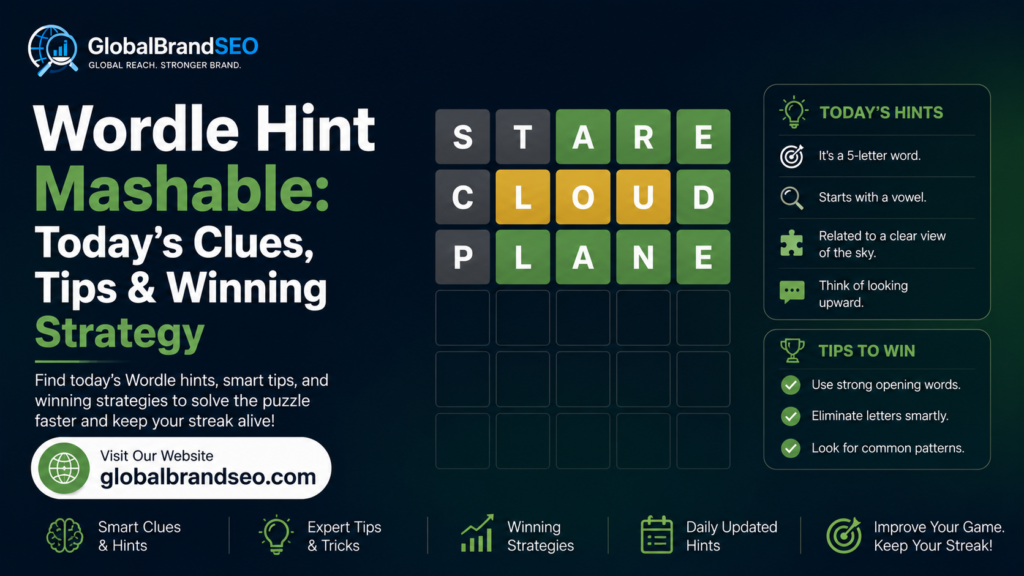

Wordle is more than a daily word game — it’s a global obsession that brings together casual players and serious logicians alike. Every day millions log into the puzzle to guess a five‑letter word in six attempts, using logic, elimination, and a bit of educated intuition. But as the difficulty increases and streaks mount, players naturally look for help. That’s where wordle hint mashable comes in — a keyword that represents not just today’s clues, but a broader strategy for conquering the Wordle board consistently. In this article, we will unpack the best ways to approach the game with intelligence, patience, and strategy that goes beyond random guesses. If you’re driven to boost your win rate, deepen your understanding, and play smarter each day, you’ve come to the right place.
Understanding Wordle: A Brief Primer
To fully appreciate a wordle hint mashable approach, it helps to understand the fundamentals of Wordle itself. Created by software engineer Josh Wardle in 2021, Wordle quickly captured the imagination of players worldwide. Its premise is simple — guess a five‑letter word, receive color‑coded feedback for each letter, and use that information to narrow down your guesses. Green means the letter is correct and in the right spot, yellow means the letter is in the word but in a different spot, and gray means the letter isn’t in the answer at all. This color feedback system is deceptively basic; the real strategy comes from how players analyze that feedback.
The brilliance of Wordle lies in its balance between simplicity and depth. On the surface, it appears like a casual puzzle. But underneath, a web of letter patterns, frequency distributions, and inference logic gives dedicated players countless ways to refine their approach. This is where smart hints — such as those referenced with wordle hint mashable — really make a difference. These aren’t just random clues; they’re patterns rooted in linguistic logic and probability.
Why Players Seek Wordle Hints
There’s a reason players actively seek wordle hint mashable guides every day — Wordle can be unpredictable. Even veteran players find themselves stuck on a puzzle because the answer contains unusual letters or a rare combination. The psychology of getting stuck is powerful: you know the game, you’ve tried many words, yet you’re staring at that same feedback screen, uncertain whether your next submission will lead to victory or failure.
This is where a strategic hint — not a spoiler — is valuable. A quality hint doesn’t simply hand you the answer. Instead, it helps you refine your thinking patterns, identifies common letter groupings, and points you toward smarter guesses. In the world of Wordle enthusiasts, sites like Mashable often provide posts that act as daily guides, offering not just the solution (after players have lost interest in waiting) but also context on why certain letters make better guesses early in the game.
But the reasons for chasing hints go deeper than simply escaping a puzzle. Many players treat Wordle as a daily ritual, a cognitive warm‑up, or a social competition with friends. A hint becomes something to discuss, debate, and share — a communal experience. Whether you’re new to the game or trying to maintain an unbroken streak, wordle hint mashable serves as a bridge between confusion and clarity.
The Anatomy of an Effective Wordle Hint
Not all hints are created equal. In this section, we break down what makes a hint truly valuable for Wordle players. These elements also represent what many readers search for when they type wordle hint mashable into a search bar.
1. Relevance: A hint must be applicable to the current day’s puzzle. Generic advice is useful in early learning but becomes less meaningful as players seek details tailored to today’s word.
2. Strategic, Not Revealing: The best hints avoid direct spoilers. Instead of saying “the word is …,” a quality hint guides you toward patterns like “Try starting with a vowel‑heavy word if you haven’t already.”
3. Based on Letter Frequency: High‑value Wordle hints lean on the distribution of letters in the English language. For example, vowels like A, E, and O appear far more often than letters like Q or Z. Knowing this informs your guesses.
4. Feedback‑Informed: A hint becomes more effective when it uses the results of your previous guesses. If you’ve identified certain letters, a good hint helps you think about logical next steps based on color feedback.
5. Encouraging Logical Deduction: Strong hints help players recognize patterns like common consonant clusters (ST, TH, CH) and vowels that frequently appear together (AI, EA, OU).
When sites like Mashable provide Wordle hints, they often include these principles — offering a blend of probability, logic, and pattern recognition rather than lazy spoilers.
Core Wordle Strategies Every Player Should Know
To maximize the benefits of wordle hint mashable, it’s essential to adopt a strategic framework that you can use for every puzzle. Below are some foundational tactics that high‑performing Wordle players use consistently.
Choose Smart Starting Words
Your first guess in Wordle is your foundation. An intelligent opening word serves two purposes: it helps you discover vowels, and it tests common consonants. Words like “ARISE,” “SOARE,” “ADIEU,” and “CRANE” are popular among experienced players because they contain multiple vowels and high‑frequency consonants.
Avoid guesses with redundant letters early in the game unless you have a strategic reason. The first guess should maximize the amount of information you gain — even if it doesn’t get you closer to the final answer immediately.
Leverage Letter Frequency and Position
After your first guess, analyze the color feedback with disciplined focus. If you get green letters early, lock them in for future guesses. If you receive yellow feedback on vowels like A or E, build words around those vowels in new positions. Similarly, gray letters should be ruled out — at least for future guesses unless you suspect special cases.
Avoid Repeating Letters Unless Necessary
One of the most common mistakes beginners make is guessing words that reuse letters that have already been ruled out. While repeated letters are sometimes part of the answer, they should be verified logically rather than guessed prematurely.
Use Partial Information Intelligently
If you know the word contains an E and an R but not in their current positions, your next guess should be structured to try both letters in new positions. Smart Wordle play isn’t just about letters — it’s about positions.
Consider Language Patterns and Clusters
English has patterns like “TH,” “CH,” “SH,” and “ING,” which are far more common than random pairings like “Q” next to “V.” By understanding these patterns, you can make guesses that reflect how real words are constructed. This language intuition is part of what separates casual players from strategic ones.
These tactics, when combined with regular wordle hint mashable insights, produce consistently better outcomes over time.
Mashable’s Role in Wordle Community and Hints
Mashable has become a go‑to hub for daily Wordle clues, analysis, and community sharing. The reasons behind its popularity are rooted in its ability to write approachable content that appeals to both casual players and serious strategists.
Mashable’s Wordle hint articles often follow key principles:
- They provide contextual clues without direct spoilers.
- They analyze the puzzle based on known letter patterns and difficulty trends.
- They offer explanations for why certain guesses make sense logically.
- They entertain as much as they inform, often with cultural tie‑ins or humor that keeps readers engaged.
By balancing clarity with strategy, Mashable helps a broad audience get better at Wordle without reducing the puzzle to guesswork. This makes wordle hint mashable a search term that captures not just hints, but deeper analytical guidance that players actively seek every day.
Whether you’re looking for help with a single puzzle or aiming to sharpen your overall Wordle IQ, the way Mashable structures its insights gives players a well‑rounded perspective instead of simple one‑line clues.
Common Wordle Mistakes Beginners Make
For any player searching for wordle hint mashable, there’s a pattern of mistakes that tend to derail Wordle success. Understanding these pitfalls is key to improving your results.
Starting With Random Words
Many players start with words chosen more for preference than strategy. Words like “APPLE,” “HOUSE,” or “BLANK” may seem fine, but if they repeat letters or fail to cover a range of common letters, they fail to maximize informational gain.
Ignoring Color Feedback
Feedback is Wordle’s way of giving you data. Ignoring it — or misinterpreting it — is like ignoring clues in a mystery game. For example, if a letter is green, that position should remain fixed unless there’s a clear reason to reposition.
Reusing Gray Letters
Gray letters are confirmed not to appear in the answer (in most cases). Repeating them wastes guesses and creates confusion.
Overlooking Vowel Strategy
Vowels form the backbone of English words. Players who aggressively map vowel positions tend to succeed quicker because they narrow down word possibilities faster.
By recognizing and correcting these common mistakes, players can use hints more effectively and improve word puzzle accuracy.
Advanced Wordle Tips Beyond Hints
For players who have mastered the basics and regularly consult wordle hint mashable resources, there are next‑level strategies that refine success even further:
Track Patterns Over Time
Some players track past Wordle answers to recognize linguistic trends — such as how often certain letters show up together or the types of vowel distributions that appear more often.
Use Elimination Grids
Create your own letter grid to visualize which letters are confirmed green, yellow, or eliminated. This gives a systematic way to think about the remaining possibilities.
Play With Constraint Logic
Instead of making guesses that are merely hopeful, build guesses based on constraint logic — where each guess must abide by everything you know so far. This dramatically improves efficiency.
Stay Flexible, Not Fixed
Sometimes Wordle answers defy common patterns. In those moments, players must balance strategy with intuition and risk management.
The Social and Competitive Side of Wordle
Part of why wordle hint mashable is such a popular phrase is that Wordle isn’t played in isolation for most people — it’s a shared experience. Whether you’re comparing streaks with friends, posting colored result grids on social media, or participating in weekly community challenges, Wordle has become a social ritual as much as a logical puzzle.
Sharing hints, discussing strategies, and celebrating victories together deepens the appeal of the game. Sites like Mashable give players not just the tools to solve puzzles but also the language to talk about them. They help turn an individual game into a shared cultural moment.
Conclusion: Mastering Wordle With Strategy and Smart Hints
In the world of daily word puzzles, Wordle stands out not because it’s complex — but because it rewards strategic thinking and clear logic. For players who want to improve, wordle hint mashable isn’t simply about finding a shortcut. It’s about tapping into smarter gameplay, understanding language patterns, and enhancing your own puzzle‑solving methodology.
Whether you’re new to Wordle or aiming to break a personal streak record, mastering the fundamentals — smart starting words, color feedback interpretation, elimination logic, and strategic guessing — will serve you well. The clues you glean from hints should guide your thinking, not replace it. In time, you’ll find yourself needing fewer hints and making better guesses on your own.
So tomorrow when you sit down with today’s puzzle, remember: approach it with strategy, embrace every hint as a learning tool, and let your logical reasoning guide you — because Wordle isn’t just a game, it’s a path to sharper thinking.