
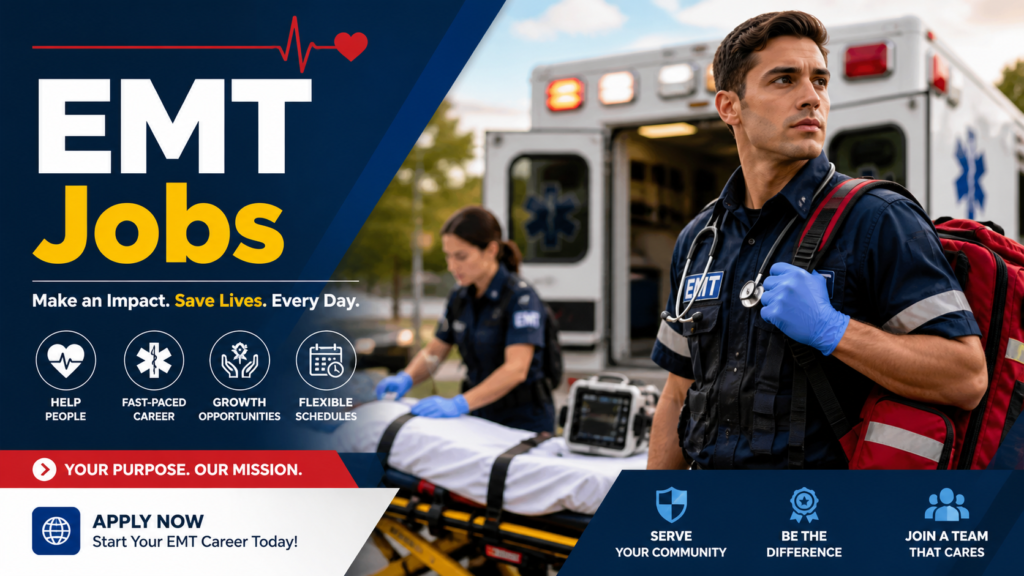

Introduction: What is an EMT Job and Why Should You Consider It?
Emergency Medical Technicians (EMTs) play a vital role in providing emergency care to those in need, often being the first responders to accidents, medical crises, or natural disasters. If you’ve ever wondered about becoming an EMT, this guide is for you. We’ll walk you through what an EMT job involves, the necessary skills, training, and the exciting career opportunities that await. Whether you’re just beginning your journey into healthcare or are looking to make a career shift, the EMT profession offers a rewarding and dynamic path.
What Does an EMT Do? An Overview of EMT Job Responsibilities
The role of an EMT goes beyond just driving an ambulance. EMTs provide critical care in emergency situations, helping to stabilize patients before they reach the hospital. Whether it’s assessing the patient’s condition, performing CPR, or managing trauma, EMTs must remain calm under pressure while delivering life-saving interventions. This section will outline the day-to-day responsibilities of an EMT, including the various types of emergencies they respond to and the tools and equipment they use to provide care.
Different Levels of EMT Jobs: EMT-Basic, EMT-Intermediate, and Paramedic
Not all EMT jobs are the same. Depending on your level of certification, your duties and scope of practice can vary. The three primary levels of EMT certification are EMT-Basic (EMT-B), EMT-Intermediate (EMT-I), and Paramedic. In this section, we will dive into the differences between these levels, including the training and certification requirements for each, the types of medical procedures EMTs are allowed to perform, and the career paths available within each category.
How to Become an EMT: Training and Certification Requirements
To become an EMT, certain steps must be followed. This section will cover the essential training and certification required to begin your career. From enrolling in an accredited EMT program to passing the National Registry of Emergency Medical Technicians (NREMT) exam, we’ll guide you through every step. We’ll also discuss how long the training takes, the skills you’ll gain, and the exams required to start your EMT career.
Skills Needed to Succeed as an EMT
Being an EMT requires more than just medical knowledge; you must also possess specific soft skills to perform effectively in high-pressure situations. Critical thinking, communication, teamwork, and empathy are essential skills for EMTs. This section will explore the top skills needed to succeed in the role, how to develop these skills, and why they are crucial for providing the best possible care to patients.
EMT Job Opportunities: Where Can You Work?
EMTs have various employment opportunities beyond traditional ambulance services. In this section, we will explore the different settings where EMTs can work, including fire departments, hospitals, and even special event medical teams. Additionally, we will cover opportunities for EMTs to advance into specialized fields such as flight paramedicine or tactical EMS, highlighting the diverse paths an EMT can pursue.
What is the Salary Range for EMT Jobs?
One of the most common questions aspiring EMTs ask is, “How much can I earn?” The salary for EMTs can vary depending on experience, location, and the level of certification. This section will provide a breakdown of EMT salaries, the factors that influence pay, and how you can maximize your earnings in this field. We will also discuss benefits, such as healthcare coverage, retirement plans, and other perks that come with working as an EMT.
The Challenges of Being an EMT: What You Need to Know
While being an EMT can be incredibly rewarding, it also comes with its challenges. The physical and emotional demands of the job can be taxing, especially when dealing with life-or-death situations on a daily basis. In this section, we will discuss the common challenges faced by EMTs, including long hours, physical stress, emotional fatigue, and the potential risks involved. We’ll also explore how to cope with these challenges and maintain a healthy work-life balance.
The Future of EMT Jobs: What’s Next for the Profession?
The demand for EMTs is expected to grow in the coming years, driven by an aging population, an increase in emergency situations, and the evolving needs of healthcare. This section will look at the future of EMT jobs, including technological advancements in emergency medicine, the role of EMTs in telemedicine, and the potential for career growth and advancement. We’ll also highlight the growing trend of EMTs becoming integral parts of healthcare teams in hospitals and other settings.
How to Stand Out and Advance Your EMT Career
Once you’ve gained experience as an EMT, you may want to explore ways to advance in your career. This section will provide tips on how to stand out in the field, including pursuing further education (e.g., becoming a paramedic), obtaining specialized certifications, and networking within the industry. We’ll also cover potential leadership roles, such as training new EMTs or becoming an operations supervisor.
Conclusion: Is an EMT Job Right for You?
Becoming an EMT is a decision that should not be taken lightly. It requires hard work, dedication, and a passion for helping others. If you are someone who thrives under pressure, enjoys making a difference in people’s lives, and is looking for a dynamic and fulfilling career, an EMT job may be the perfect fit for you. As we’ve discussed in this guide, EMT jobs offer exciting opportunities, challenges, and a chance to play a critical role in emergency healthcare. If you’re ready to make a difference, consider starting your journey toward becoming an Emergency Medical Technician today.